Products (0)
Nie znaleziono produktów dla ""

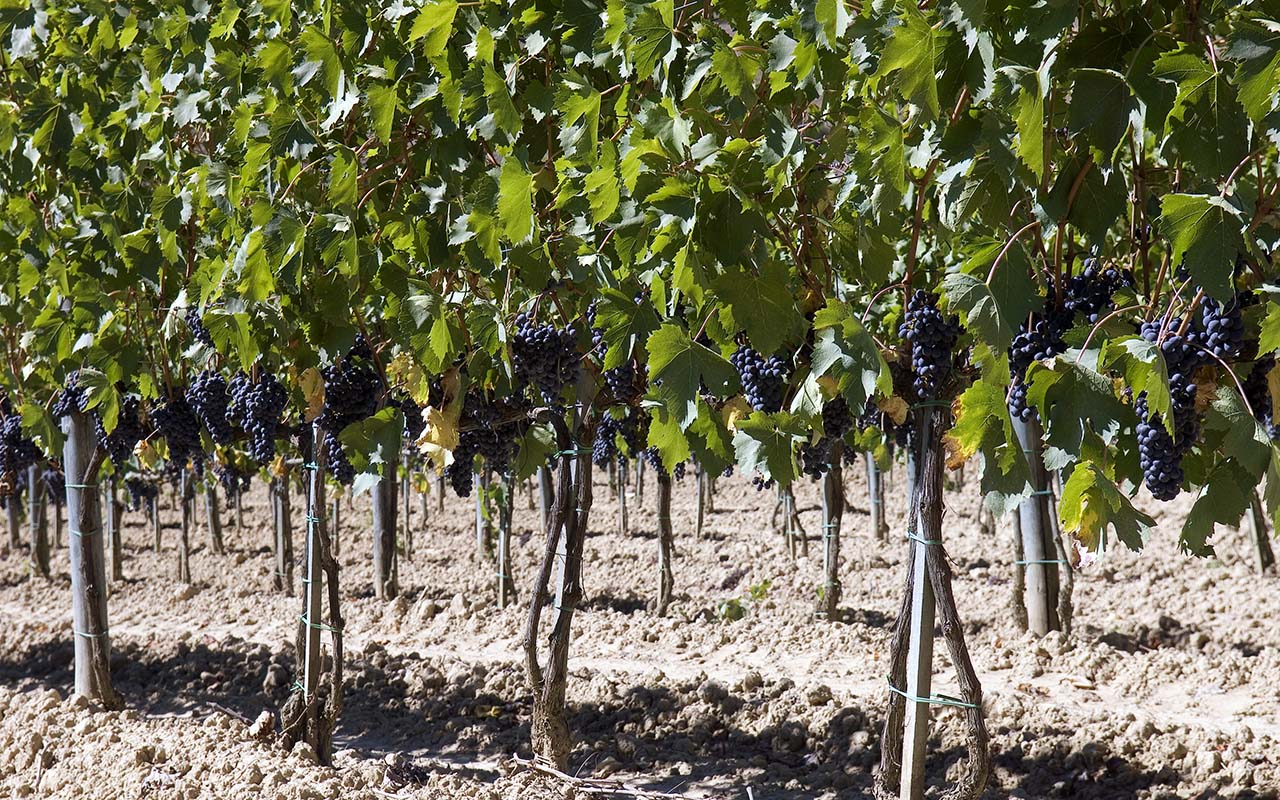
An exceptional variety of the vitis vinifera species whose homeland is sunny Tuscany. Its name derives from the Latin sanguis Jovis, meaning "the blood of Jove". The first mentions of it date back to the end of the 16th century. The origin of the variety still stirs debate, however – DNA studies indicated a kinship with the ciliegiolo and calabrese di montenuovo varieties, but newer analyses from 2020 undermined this hypothesis. One thing is certain: sangiovese was already known in the 16th century.
Characteristics of the variety
Late ripening: The vine buds early but ripens slowly, requiring a long and warm growing season.
Sensitivity to terroir: depending on the place of cultivation it drastically changes its character – it loves calcareous and clay soils the most.
Demanding cultivation: it has a tendency towards excessive fruiting, which can lead to a dilution of the wine's flavour, and due to its thin skin it copes poorly with rain during harvest and with fungal diseases.
Wines created from this variety have a colour ranging from light ruby turning into garnet, which with age takes on brown shades. The wines are characterised by a medium to full structure, high acidity and pronounced tannins. The dominant aromas are sour cherry, red plum, strawberry and dried figs, with notes of tomato, herbs, tobacco, leather and clay. Ageing in wood enriches them with accents of vanilla, warm spices, dried roses and tea.
Sangiovese is the foundation of three great Tuscan appellations:
Chianti Classico DOCG – this variety must constitute a minimum of 80% of the blend, although it is also sometimes vinified as a single varietal.
Brunello di Montalcino DOCG – a powerful and long-lived wine made from one hundred percent Sangiovese aged for a minimum of 5 years.
Vino Nobile di Montepulciano DOCG – based on the local clone Prugnolo Gentile, which must constitute at least 70% of the composition.
Where else will you find it? In Italy it also grows successfully in Romagna and Umbria. In Corsica it appears under the name nielluccio. Outside Europe it conquers California (the Napa and Sonoma valleys), Argentina and Australia, where thanks to the warmer climate it gives a more juicy and fruity profile.
Thanks to its lively acidity and tannin structure, sangiovese is one of the most versatile partners for food. Classically it pairs with Italian cuisine:
Tomato dishes – the wine's acidity perfectly harmonises with tomato sauces in bolognese pasta, lasagne or pizza margherita.
Red meats – the wine's solid body pairs wonderfully with bistecca alla fiorentina steak, roast lamb, braised game as well as Italian cured meats and salami.
Cheeses – it forms an excellent duo with hard cheeses, especially with mature Tuscan pecorino, whose saltiness perfectly balances the acidity of the drink.
By clicking "Accept", you agree to the storage of cookies on your device to enhance site navigation, analyze site usage, and assist in our marketing efforts. Learn more