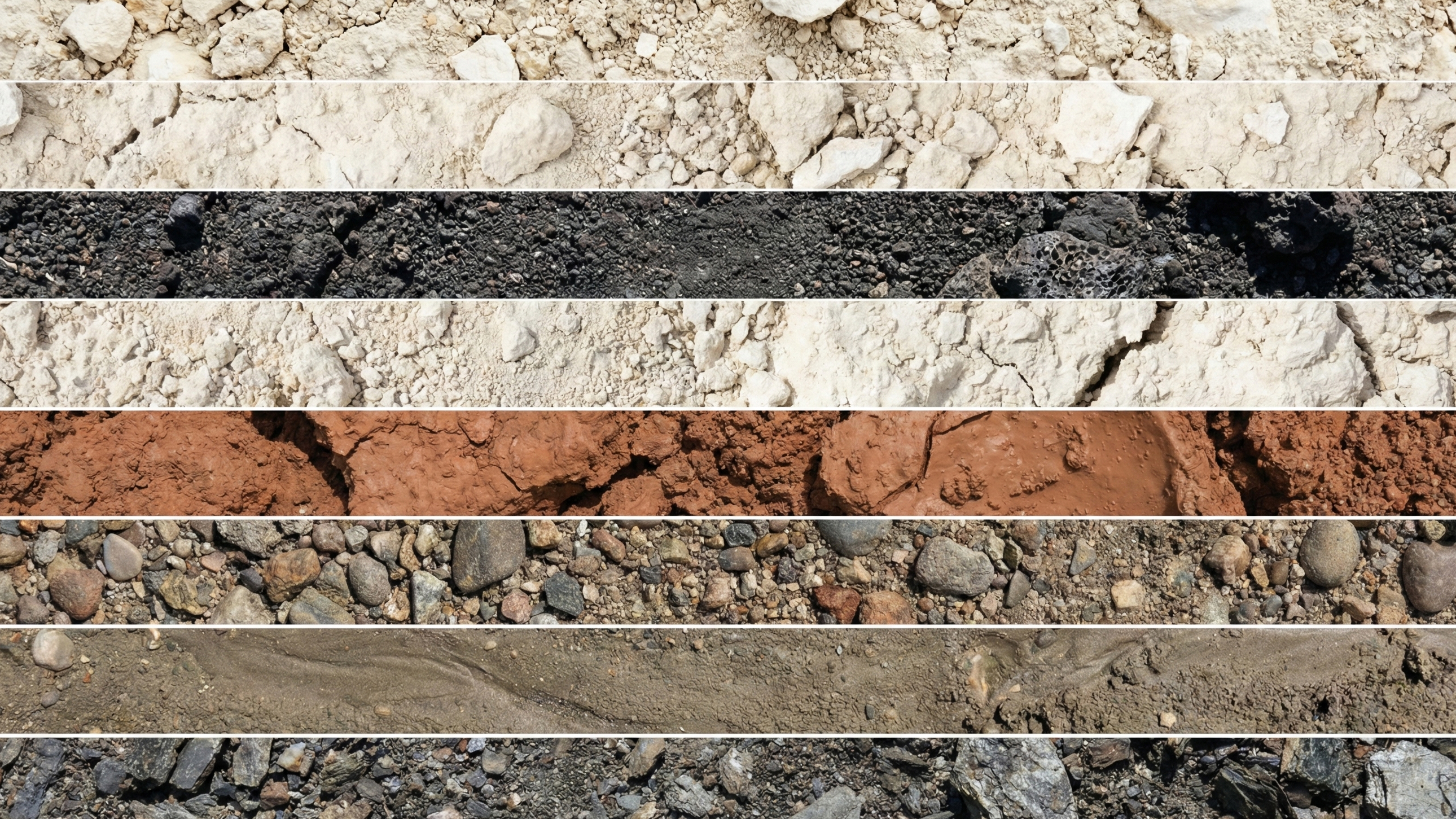
Is it true that for wine to be outstanding, the vine must suffer? Although intuition tells us that lush and fertile soil is paradise for plants, in winemaking the rules of the game are completely different. Adam Dymarczyk takes us on a journey beneath the surface of vineyards – from the chalky slopes of Champagne, through the hot Andalusian albariza, to the volcanic rocks of Sicily.
When asked what is the most important factor in wine production, there is a simple answer – the vine and the specific grape variety. Other very important aspects are the winemaker himself and his expression, as well as the broadly understood terroir. An extremely important part of the latter is a factor without which the discussion of wine production would not make much sense. Soil, because that's what we're talking about, has a significant impact on the final result of the winemaker's work. As the medium responsible for nourishing the vine, it affects the aroma and taste of wine. Different types of soil offer different properties, which is why the same grape variety will produce decidedly different wines depending on the country or region of cultivation. It is said that for a vine to produce good fruit, it must suffer. That's why winemakers prefer soils with not very high fertility. In very good conditions, the plant will focus on supplying mineral nutrients to the leaves and shoots, resulting in lower quality fruit. Substrates with reduced nutrient content, in a sense, force the vine to penetrate deeper and root more deeply, which results in higher quality grapes. The influence of soil on vines, types of soils and their occurrence Chalk soils They are often remnants of ancient seas, which is why they are rich in calcium and fossils. They have a significant impact on highly desirable characteristics in winemaking, namely minerality and freshness. These soils are capable of storing water during periods of low precipitation and quickly release it when there is excess. These substrates also help maintain stable temperature of the root system because they reflect sunlight. Chalk soils have a major influence on aromatic and flavor profiles in Champagne, Burgundy, and the Loire Valley. Perfect examples of wines from such soil: Cattier Brut Nature Premier Cru – fruity-floral aromas with a predominance of citrus and ripe mirabelle plums, taste harmonizes with the bouquet, enriched with biscuit accents. Chablis 1er Cru Les Vaucopin Blanc – fresh on the nose, with a predominance of mineral-fruity notes and lime. Lively, soft, very tasty wine. Sancerre Blanc Les Montachins – aromas of white fruits and citrus, accents of ripe melon. Elegant and mineral. In my work related to wine, I have repeatedly encountered champagne collectors who finished the walls of their cellars with chalk to maintain stable conditions for their treasures. Limestone soils Like chalk, limestone has good moisture retention, which helps properly hydrate the plant, but also forces the root system to penetrate the soil more deeply in search of water. Limestone substrate also effectively reflects sunlight and stores heat well in cooler climates. The alkaline reaction of these soils has a major impact on the appropriate amount of mineral components in grapes. Wines from regions rich in limestone can be characterized by complexity, while they can also be subtle. Which varieties like such soils? White varieties include chardonnay, sauvignon blanc, albariño, and riesling. Red varieties include pinot noir, malbec, tempranillo, and sangiovese. Worth trying: Waipara West Sauvignon Blanc – perfect sauvignon blanc, white fruits in the aroma accompanied by citrus. Delicate sweetness in taste mixes with minerality, which perfectly supports a lasting finish. Perhaps some haven't tried this wine yet, it should be remedied quickly. Pradorey Elite – highly limited, rich and mineral on the nose. Dark fruits, delicate smoke. Juicy in the mouth, full, with perceptible tannin. High aging potential. Volcanic soils These substrates are formed from the decomposition of volcanic materials: lava, ash, pumice. They are characterized by high mineral content that greatly influences the character of the wine. High drainage, or water flow, forces the vine to root deeply, which increases fruit quality. These soils can absorb larger amounts of heat, which is desirable in cooler climates, but can overly accelerate ripening in warm climates. Varieties? White varieties that do well on volcanic substrates include chardonnay and fiano, while red varieties include sangiovese, nerello mascalese, and pinot noir. De Falco Fiano Di Avellino – fresh, floral-fruity on the nose, with white fruits predominating. Similar in taste, an excellent example of fiano from the Italian Campania. Orestiadi Etna Rosso La Gelsomina – an excellent example of nerello from Sicily, less known than another popular variety there – nero d'avola. Red fruits on the nose, such as cherries and strawberries, plus vanilla with a subtle floral note. Full in taste, fruity-mineral. Albariza soil Hot and dry Andalusia is a place where albariza-type substrate is common. The specific characteristics of this soil facilitate vine cultivation in dry and hot regions. Albariza is rich in chalk and limestone but also contains sand and clay. This helps retain water below the surface. The composition also causes good reflection of sunlight from the soil. Varieties that do well in these conditions are palomino, pedro ximénez, and muscat of Alexandria, which reign in Andalusia. Marques del Real Tesoro Tio Mateo Fino – an excellent example of fino-type sherry. Lots of nuts and green apples on the nose, bread-herbal in taste with a characteristic salty finish. Manzanilla La Guita – a cult wine that every sherry lover should try. White fruits and a distinct nutty note in the aroma. Dry sherry in taste with a distinct saltiness at the end. Clay soils The basic characteristic of these substrates is a fine-grained and rather dense structure. They store water excellently but also have difficulty releasing it, so with excessive accumulation there may be drainage problems. They are perfectly suited to cool climates. Often these soils are rich in iron, calcium, and magnesium, which positively affects taste and emphasizes the minerality of wines. Wines from grapes grown on such soils often have a distinct structure, are full, and red varieties have strongly marked tannins. These characteristics mean that such wines often show high potential for maturation and aging. Classic white varieties do excellently on clay substrates: chardonnay, sauvignon blanc, and chenin blanc, as well as red varieties: cabernet sauvignon, merlot, and syrah. Kleine Zalze Project Z Chenin Blanc – clay-granite soils actively participated in the creation of this exceptional, limited wine. Citrus and white fruits on the nose with a delicate yeasty note. Perfectly mineral in taste with a clearly marked structure. A truly tasting beverage. Rodney Strong Merlot Sonoma – blackberries, currants plus figs with vanilla accents on the nose. Juicy, fruity, soft and ripe in taste. 15% alcohol is practically imperceptible. Gravel soils They are characterized by a high content of small stones and rubble, which ensures excellent water drainage and strengthens the root system. In addition, gravel excellently accumulates heat during the day and releases it at night. This extends grape ripening. Gravel soils are not very rich in nutrients, which is another reason for the vine's "suffering" and forces the bushes to concentrate sugars in the fruit. Red varieties that like this type of soil include cabernet sauvignon, malbec, merlot, and syrah, while white varieties include sauvignon blanc, chardonnay, and riesling. De Stefani Vènis Sauvignon Blanc – sauvignon blanc from a single vineyard, Le Ronche. If you want to try an excellent sauvignon blanc from Europe, Vènis is the answer. Nose full of citrus, white fruits, plus delicate floral notes. Juicy fresh and full of fruit in taste with distinct minerality. Oakville Cabernet Sauvignon – powerful cabernet from California. Spices, dark fruits, a note of graphite and chocolate on the nose. Cherries, currant, chocolate and oaky vanilla in taste. Alluvial soils These soils are the result of mineral deposition brought by rivers or remnants of various types of water bodies. They are fertile soils because they contain a lot of organic matter. Usually these substrates are well moistened, although a large content of deposited sand and gravel can cause rapid moisture loss. Varieties: white chardonnay and red: cabernet sauvignon, merlot, pinot noir. Crozes-Hermitage La Matinière Rouge – red fruits on the nose with currants and raspberries predominating, delicately spicy, with a smoky note. Mouth full of red fruits and spices. Finally, a gem. Llicorella A unique soil can be found in Catalonia, specifically in the Priorat appellation. Llicorella, because that's what we're talking about, is volcanic soil where red slate and quartz dominate, which have a fundamental impact on the quality of local wines. The vine has exceptionally difficult work to do in these conditions. On one hand, roots must penetrate deeply in search of nutrients, on the other hand, they sometimes spread across the surface for up to several meters. The result is low yields, but the concentration of aromas and flavors in the fruit is very high. The specific composition of this substrate also increases minerality in wine. Varieties: garnacha, garnacha blanc, carignan. Bellmunt Negre Red – ripe cherry, chocolate-covered plums, licorice and smoky accent in the aroma. Full in the mouth, well-structured, red fruits dominate. Bellmunt Blanc – citrus, pears, mirabelle plum and a floral note on the nose. In the mouth we find citrus, white orchard fruits with a herbal-mineral finish. As you can see, the influence of soil on wine is undeniable. It is also inseparably linked to the region's climate. The mentioned "suffering" of the vine has only a positive effect on the final character of the beverage. Of course, different types of substrates can occur in one region, which means that in a given area we will obtain different wines from the same variety. Add to this the human factor, and a skilled and experienced winemaker will do everything to extract all the potential contained in a given soil.
-copy-webp.webp)