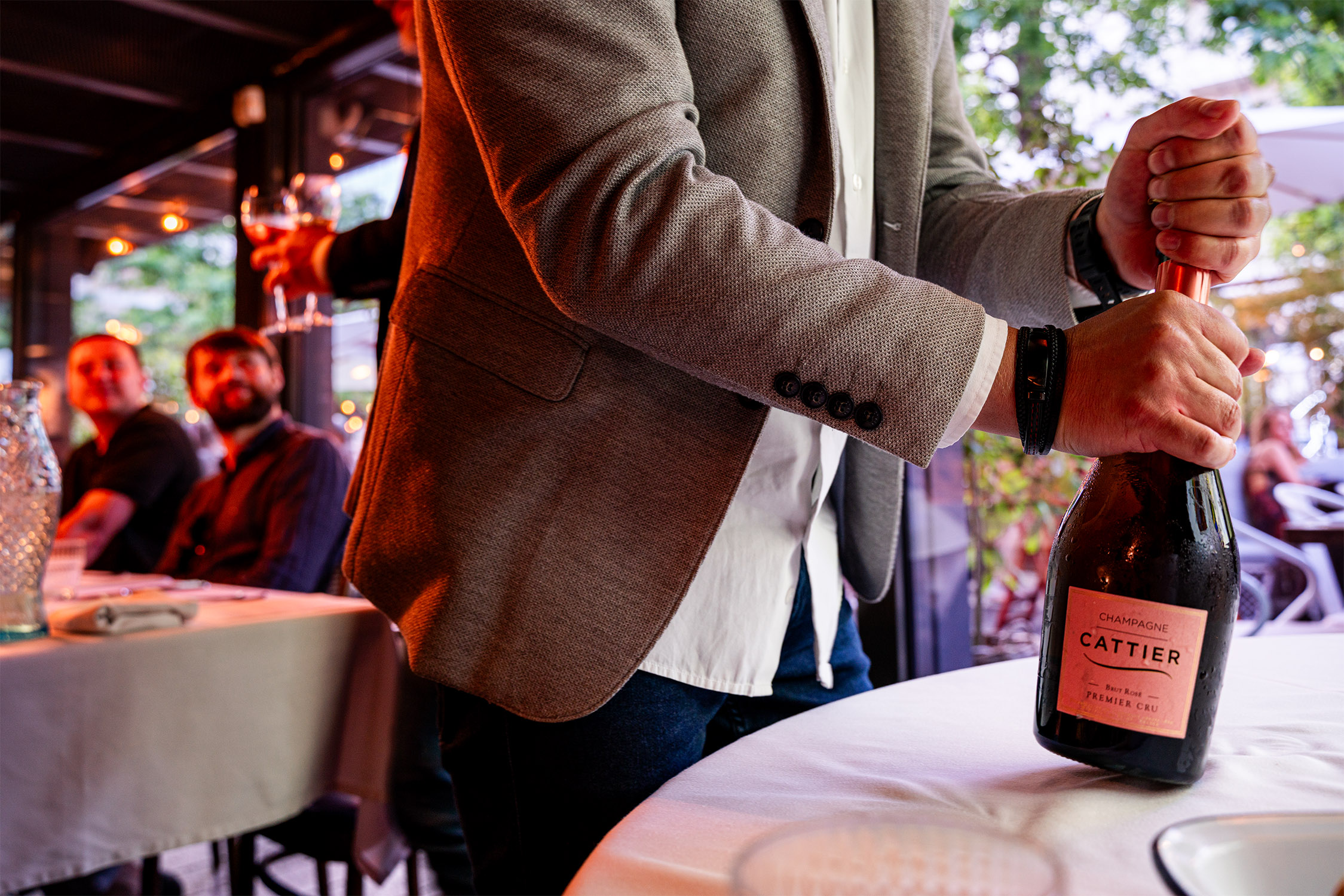
Sparkling wines have been associated with celebration, joy and special moments for years. We open them at weddings, New Year's Eve, birthdays or promotions at work. It's a world full of diverse flavors that emphasize the uniqueness of the moment. You go to the store, stand in front of the shelf with sparkling wines, glance at the labels and there's prosecco, cava, champagne – and now what?
Let's start with the most important thing: what is sparkling wine? Sparkling wine is a type of wine that contains naturally produced carbon dioxide, responsible for the characteristic bubbles and feeling of freshness. This gas is created during alcoholic fermentation, when yeast converts sugar into alcohol and carbon dioxide. Although they all have bubbles and a similar appearance, they differ in origin, production method, taste, and price. Choosing the right sparkling wine suddenly becomes not so simple, especially when you want to match it to a specific occasion or budget. Some are ideal for casual gatherings with friends, others will emphasize the special character of important celebrations. In this article, we explain in a simple way the most important differences between prosecco, cava, and champagne, and suggest which sparkling wine to choose to fully enjoy its taste. How are bubbles created in wine? Depending on the style and production method, the second fermentation can take place directly in the bottle or in large, tightly sealed tanks. It is precisely the fermentation method that affects the intensity of the bubbles, the structure of the wine, and its aromas and taste. Sparkling wines can have different levels of dryness – from very dry to semi-sweet – making it easy to match them to the occasion and personal preferences. Champagne – the king among sparkling wines Where does Champagne come from? Champagne is an exceptional sparkling wine that can only come from the Champagne region in France. Its name is legally protected, which means that only wines meeting specific production and geographical requirements can be called champagne. Champagne production – the traditional method The key feature is the traditional method, called méthode champenoise (champagne method), in which the second fermentation takes place directly in the bottle. It is this process that is responsible for the refined, fine bubbles and exceptional structure of the wine. Grape varieties in champagne Three grape varieties are mainly used to produce champagne: chardonnay, pinot noir, and pinot meunier, which give it elegance, depth, and complexity. How does champagne taste? Champagne is renowned for its rich aromatic profile. In the glass, you can detect notes of citrus, green apples, toast, brioche, almonds, and sometimes also butter or honey. The most popular style is brut, which is dry and universal champagne. Extra brut is even drier and valued by connoisseurs, while demi-sec, semi-sweet, is encountered less frequently. In the M&P offer, you can find excellent champagnes that combine wonderful taste with sophistication and elegance: Tribaut ORIGINE SEC Box - M&P Alcohols Wines Cigars Cattier Brut Icone - M&P Alcohols Wines Cigars Prosecco – Italian lightness and freshness Prosecco is one of the most popular sparkling wines in the world, valued for its lightness, freshness, and accessibility. Veneto and Friuli – regions of origin of prosecco Prosecco comes from northern Italy, mainly from the Veneto and Friuli regions, where ideal conditions for growing vines prevail. Charmat method – fermentation in tanks Unlike champagne, prosecco is produced using the charmat method, in which the second fermentation takes place in large steel tanks. Thanks to this, the wine retains a fresh, fruity character and a more direct style. The basic variety used for its production is Glera, responsible for the characteristic aromas and lightness. In taste, Prosecco is delicate and crisp. Notes of green apples, pears, and citrus dominate, often complemented by floral accents. This wine is ideal as an aperitif or cocktail ingredient for casual gatherings or summer parties. Prosecco DOC vs Prosecco DOCG It's worth knowing the difference between Prosecco DOC and Prosecco DOCG. DOC versions are good everyday wines, while DOCG, coming from the best vineyards, such as Valdobbiadene or Veneto, offer greater depth of flavor and higher quality. In the M&P offer, you can find excellent Prosecco from the Veneto and Valdobbiadene regions, which combines wonderful taste with elegance and an affordable price. Prosecco FLUMEN BRUT - M&P Alcohols Wines Cigars Prosecco Frizzante Botter Spago - M&P Alcohols Wines Cigars De Stefani Prosecco Valdobbiadene - M&P Alcohols Wines Cigars Cava – Spanish alternative to Champagne Cava is a Spanish sparkling wine that is a great alternative to Champagne, both in terms of taste and price. It comes mainly from Catalonia, and its production is based on the traditional method, identical to that in Champagne – the second fermentation takes place in the bottle. Thanks to this, Cava has characteristic, delicate bubbles and a pleasant structure, although it is usually drier than Prosecco and less complex than Champagne. Spanish stars - Macabeo, Parellada, and Xarel·lo Local grape varieties are used for production: Macabeo, Parellada, and Xarel·lo, which give the wine freshness, fruity aromas, and subtle toasty notes. In taste, Cava is extremely versatile – it works perfectly both as an aperitif and accompanying light or more dry dishes. It's a wine that combines the lightness of Prosecco with the elegance and structure of Champagne, while offering an attractive quality-to-price ratio. Traditional method for every pocket The cost of a bottle of Cava usually ranges from 50 to 100 PLN, making it an excellent choice for people looking for sparkling wine produced using the traditional method, but in a more affordable price range. In the M&P offer, you can find excellent Cava that combines wonderful taste with elegance and an affordable price. eMPoro Cava Brut 0.75L - M&P Alcohols Wines Cigars CAVA HACIENDA DEL CARCHE - M&P Alcohols Wines Cigars Prosecco vs Champagne vs Cava – comparison table Feature Prosecco Cava Champagne Country Italy Spain France Method Charmat Traditional Traditional Taste Light, fruity Dry, balanced Complex, elegant Price 50–90 PLN 50–100 PLN 150 PLN+ Occasion Aperitif, party Dinner, gift Major celebrations When to choose Prosecco, and when Champagne or Cava? Choose Prosecco if: you're organizing an informal party you're looking for wine for an aperitif your budget is 40–80 PLN you like light, fruity flavors Go for Cava when: you want something drier than Prosecco you're planning a longer meal your budget is 50–100 PLN you value the traditional method Champagne will be ideal when: you're celebrating a special occasion (wedding, anniversary, success) you want to make an impression you care about the highest quality budget: 200 PLN and more Expert seller observation: In recent years, customers have definitely most often reached for Prosecco – mainly due to price and light style. Cava is also gaining more and more interest, especially among people who want quality close to Champagne, but without the high price. Champagne remains the choice "for a special occasion." Prosecco is most often bought "spontaneously," Cava – for dinners and gifts, and Champagne almost always for a specific, important event. Most frequently asked questions about sparkling wine What is more expensive – Prosecco or Cava? Cava, a Spanish sparkling wine produced using the traditional method, usually costs more than Prosecco, but is still much cheaper than Champagne. It offers more structure and dryness than light Italian wine. Which sparkling wine is the sweetest? Most often, Prosecco turns out to be the sweetest, especially in Extra Dry or Demi-Sec versions. However, the level of sweetness depends on the label marking – Brut is dry, Extra Dry and Demi-Sec are progressively sweeter. Can Prosecco be used for cocktails? Yes! Prosecco works perfectly in popular cocktails such as Aperol Spritz, Bellini, or Hugo, thanks to its light fruitiness and delicate bubbles. How to serve sparkling wine? Sparkling wine is best served chilled at a temperature of 6–10°C, in flute or tulip glasses that retain bubbles and aromas. Open the bottle carefully, holding it at a 45° angle, rotating it gently and pulling out the cork quietly so it doesn't pop. Pour slowly at an angle to the glass up to 2/3 height. Serve immediately, preferably with seafood, poultry, or desserts. Store leftovers in the refrigerator with a special stopper. Storing sparkling wine. Sparkling wines are best stored in a cool place, at a temperature of 6–12°C. Too high a temperature accelerates aging and loss of bubbles, and too low can slow down the development of aromas. Stable temperature is more important than low – sudden temperature fluctuations can negatively affect the structure of the wine. Unopened bottles are best stored horizontally, so that the cork is in contact with the wine – the cork remains moist and does not lose tightness. Opened bottles should be secured with a special sparkling wine stopper to limit the wine's contact with air and preserve the bubbles. And consumed within 1-3 days. Some high-quality Champagnes or Cavas can be stored for several years, but most Prosecco should be consumed within a year of purchase. Summary – which sparkling wine to choose? Prosecco – light, fresh, and affordable, great for everyday or gatherings with friends. Cava – excellent quality at a reasonable price, ideal for meals or for people who value the traditional method. Champagne – symbol of luxury and elegance, best for special occasions and celebrations. Golden rule Choose sparkling wine based on the occasion and budget, not just the name. Experiment, try different styles, and discover your own favorite bubbles. It is precisely this diversity that makes the world of sparkling wines so fascinating. At M&P you will find a wide selection of Prosecco, Cava, and Champagnes - discover our offer and choose the ideal sparkling wine for every occasion.
-copy-webp.webp)