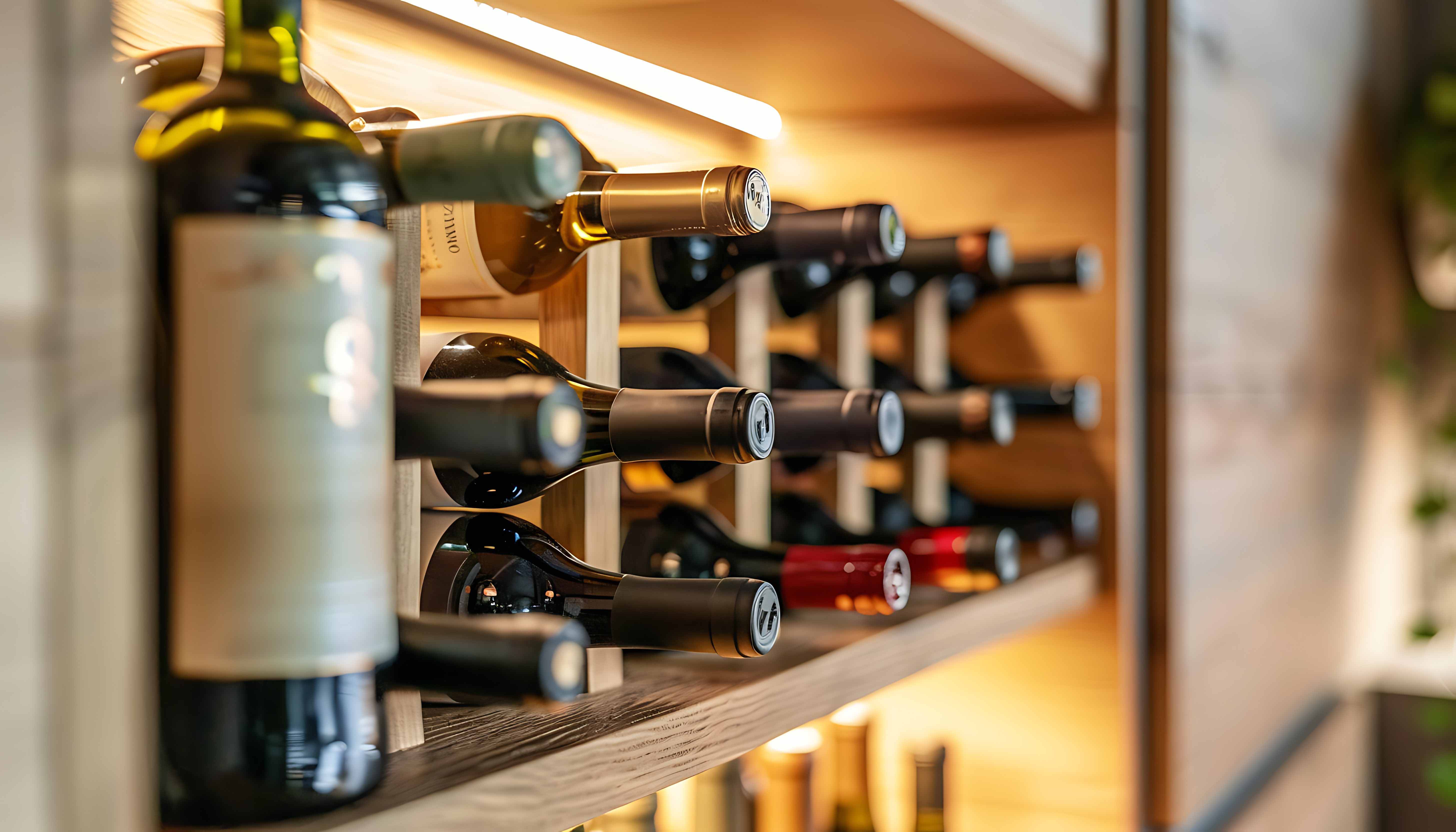
You don't need a cellar or a large budget to start your wine adventure. A dozen or so carefully selected bottles, proper storage space, and a bit of knowledge are enough. In this guide, we suggest which wines to start with, how to store them properly, and how to build your collection step by step so it grows along with your experience.
Why is it worth having a home wine collection?Comfort and freedom of choiceHaving a home wine collection is much more than just convenience — it's an adventure that combines pleasure, practicality, and a conscious approach to choices.A few carefully selected bottles stored at home give you a sense of freedom and comfort. This way, you can reach for a wine perfectly suited to any occasion at any time: a family dinner, gathering with friends, romantic evening for two, or a quiet evening just for yourself. You don't have to act in haste or rely on random decisions made at the store shelf.Time and money savingsA home collection is also a real saving of time and money. By buying wine in advance, you have the opportunity to take advantage of wine selection offers with a better quality-to-price ratio and plan purchases based on your own needs and taste. Instead of impulsive decisions, you build a collection of wines you truly enjoy and that match your lifestyle.Learning and developing tasteThe educational aspect is also significant. Having wines at home allows you to observe how they change over time — how aromas develop, structure softens, and flavor deepens. Tasting the same wines at different stages of maturation is the best wine school, teaching patience, attentiveness, and better understanding of your own preferences.Wine as decoration and gift ideaProperly stored wines can also serve a decorative function, becoming a stylish interior element. Wine from your home collection can also be an exceptional, elegant gift that the recipient will certainly appreciate.How to store wine at home?How much space is needed for wine storage?For many people, the first challenge is organizing the space where bottles can peacefully await their moment. A common question arises: can you start your wine adventure without a cellar with ideal conditions? The answer is: absolutely!In what position should wine be stored?For starters, a space where you can set up a small shelf unit with shelves adapted for storing bottles in the appropriate position is sufficient. Bottles with screw caps, wine with synthetic corks, and wines for quick consumption can be stored vertically. However, wines sealed with natural corks should lie horizontally — this keeps the cork in proper condition, preventing it from drying out.How does light affect wine?It's crucial that wine is protected from direct sunlight. UV light can negatively affect taste and aroma, especially for white and sparkling wines. Therefore, the storage location should be darkened or at least protected from direct sunlight.At what temperature should wine be stored?Wine should be stored at a constant temperature, ideally around 14–15°C.Remember, however, that it's better to have a stable 18°C than 15°C with frequent fluctuations. These are conditions that will allow wine to mature harmoniously, even if we don't have a professional cellar. In home conditions, stability and peace are what matter most.Wine cooler or shelf – what to choose for a start?If you don't have appropriate space, a wine cooler will help — a special refrigerator with constant, appropriate temperature, humidity, no vibrations, and UV light. Vibrations can disrupt the maturation process and destabilize sediment, which is why a wine cooler offers ideal, stable conditions. By providing such an environment, you'll create the perfect space for any wine collection.What wine cooler to buy for a start?For starters, a small wine cooler with a capacity of 16–28 bottles is sufficient. It's best to choose a freestanding, energy-efficient, and quiet unit with one temperature zone. Alternatively, you can opt for a dual-zone model if you want to store different types of wine at different temperatures.How long does an opened bottle of wine last?Once you've opened wine, to preserve its freshness longer, it's best to keep it in the refrigerator and drink it within the next few days. After opening the bottle, the wine reacts with oxygen, which gradually deteriorates its taste and aroma. Red wine usually stays good for about 3 days, white for about 2 days, while sparkling wine shouldn't be saved.A good solution is also using vacuum stoppers, which limit air access and help keep wine in better condition.How to buy wine for a collection – strategy and budgetHow to buy wine for a collection wisely?Buying wine with a thoughtful strategy allows you to enjoy better bottles without straining your budget. First of all, it's worth knowing when and how to buy, looking for opportunities to acquire another label for your collection. Also try to buy gradually, building your cellar step by step.When to buy wine – the best times of the yearThe best times to shop are vintage premieres, holiday periods, and offers in specialized stores such as M&P. It's precisely then that stores offer the most favorable prices and promotions that allow you to save significant amounts when building a collection.The 60/40 rule – wines ready to drink and for agingThe key is the 60/40 proportion — allocate about 60% of your budget to wines ready to drink, and 40% to bottles intended for laying down and aging. This way you develop your collection wisely and harmoniously, always having wine on hand for any occasion, while investing in the future.Pawlina Thematic Time – M&P discount systemIn M&P salons every month, the Pawlina Thematic Time offer allows you to buy selected labels at favorable prices, and the more you buy, the better for your wallet.Buy 1 bottle – pay 15% less
Buy 2 bottles – pay 20% less
Buy 3 bottles – get 1 bottle for 1 zloty
Buy 4 bottles – get 2 bottles for 1 zloty each
Buy 6 bottles – get 4 bottles for 1 zloty eachCurrent M&P offerFrom February 1 to 15, 2026, throughout the M&P Alcohols Wines Cigars network, you can choose from products from producers: Caparzo, Altesino, Tasca d'Almerita, and Tobelos.What wines to buy for your first collection?Where to start your wine adventure?Once we have a prepared space, nothing remains but to make the first purchases. It's worth starting a home wine collection with light and accessible options. This will allow you to freely discover various styles without worrying that they'll be too demanding.Best white wines for beginnersFor starters, wines made from fruity, aromatic white grape varieties work great. Mineral riesling, fresh, herbaceous sauvignon blanc, or gentle unoaked chardonnay are excellent choices. They're universal, easy to appreciate, and allow you to learn the basic flavor profiles of white wines.Red wines to start with – gentle and fruityAmong reds, a good choice would be soft and universal Merlot, juicy Primitivo, or gentle, pleasantly fruity Tempranillo. These are low-tannin wines, so they don't overwhelm beginning enthusiasts. Such step-by-step introduction will help you better understand your own taste preferences and the direction in which you want to develop your collection.Which wine regions are worth exploring?Wine selection can also be a fascinating journey around the world. Spanish Rioja will enchant you with the elegance and depth of red wines, Tuscany will reveal classic, characterful compositions based on Sangiovese, and Marlborough in New Zealand will surprise you with the intense freshness of Sauvignon Blanc. Burgundy, one of the world's most prestigious regions, will let you discover the subtlety of Pinot Noir and complexity of Chardonnay. Each of these regions brings a unique style and history to the collection.How to divide the collection – category proportionsIt's worth dividing the collection into categories to make it easier to use.Everyday wines work well with meals, for special occasions they emphasize exceptional moments, dessert wines perfectly complement sweet endings, while aging wines gain quality over time.Okay, but how many wines from each specific category should be in my "cellar"? When building a home wine collection, it's worth following a simple percentage division:| Category | Proportion |
| Everyday wines | 50% |
| For special occasions | 30% |
| For aging | 15% |
| Dessert | 5% |Wine recommendations from M&PEveryday winesArrogant Frog Sauv Blanc Nadwislanska 108 2024
An ideal choice for spring-summer evenings with a book or casual get-together with friends over board games. Also works great as an aperitif, with fish, seafood, salads, and asparagus.Casa De La Ermita Roble 2024
Another suggestion being an ideal companion both for lunch and a movie with a cheese board and glass in hand. Great with white and red meats, goulash, pâtés, cold cuts, medium-aged cheeses, and spicy pasta dishes.For special occasionsTobelos Las Piletas 2021
A suggestion that will complement a special occasion. It will perfectly highlight the flavors of a festive dinner and leave unforgettable impressions on the palate.Cattier Brut Icone Kartonik
An ideal suggestion for raising a toast and emphasizing the uniqueness of the moment.Dessert winesMoscato D'Asti Massolino 2024
Will be a wonderful sweet ending to dinner accompanied by nut cake or lemon tart as well as evening moments after a feast with delicately salted cheeses.Cantus Chenin Dulce 0.75L 8.5%
Works both as a sweet accent after dinner and as an aperitif. Perfect for a cocktail with mint and soda water and in combination with desserts and soft cheeses.Wines for agingRocca Guicciarda Chianti Classico Riserva
A composition that after a few years in your home collection will take you on an extraordinary journey through developed aromas and deepened flavor.Erste+Neue Puntay Chardonnay
Great choice if you're looking for a white wine to complement your collection. Perfect paired with fish, seafood, and Asian cuisine dishes.How to manage a home wine collection?Label and code systemTo effectively manage your wine collection, it's worth introducing a system of labels and notes. Mark bottles with numbers or codes, and attached labels can contain basic information. Such a system makes it easy to quickly find a specific bottle and control inventory.What information to record about each wine?In notes, it's worth recording:
- wine name
- producer
- vintage
- country of origin
- wine type
- purchase date and price
- your taste and aroma impressions.Such records will help you maintain optimal aging time for each bottle in the collection and allow you to track the development of your taste preferences.Collection management appsYou can also use dedicated applications such as CellarTracker or Wine-Searcher. They help control wines, add photos, ratings, and maintain digital documentation of the entire collection. This is especially useful when your collection starts to grow.How to invest in wine – a beginner's guideWhat is investment wine?The next stage in the adventure of creating a collection can be investment wines. In this case, it's worth starting by understanding that such wine is an asset whose value grows due to limited supply and growing demand.Set a budget and strategyYour attention should focus on wines gaining value that have maintained stable growth over the years, particularly from recognized producers from regions such as Bordeaux, Burgundy, Champagne, or Tuscany. The next step should be setting a budget that will allow you to consciously plan purchases and adapt the strategy to your capabilities.How to distribute investment across different wines?When planning purchases, it's crucial not to invest all capital in one type of wine, one region, or one vineyard, but to spread the investment across several different options. This reduces the risk that a decline in value of one wine or region will affect the entire collection. Think long-term and diversify your choices.Where to safely buy investment wines?It's very important to buy wines from verified sources: official importers such as M&P, recognized auction houses, investment platforms, or professional shops with documented storage history. Avoid purchases from uncertain sources where there's no guarantee of authenticity and proper storage.Which vintages are best for investment?It's also important to pay attention to vintages. Some vintages are particularly valued – the famous "good years" – and are characterized by higher value and investment stability. But more on that next time.FAQ - Frequently asked questions about wine collectionsHow many bottles of wine are needed to start a collection?A starter wine collection usually ranges from 15–25 bottles, which provides a good balance between diversity and practicality. This number allows you to learn different wine styles, learn about their aging, and freely rotate contents without having to invest in a large cellar. It's worth including in the set:4–8 bottles of red wines intended for aging
4–6 bottles of red wines ready to drink daily
4–6 bottles of white wines
2–3 sparkling
1–2 sweet or dessert.Such a division creates a solid and balanced foundation for a beginning collection.Can wine be stored in a regular refrigerator?A regular refrigerator is not a suitable place for long-term wine storage. It maintains too low a temperature, usually 2–6°C, while wine ages best at a stable 14–15°C. The refrigerator also has very low humidity, which can dry out corks and lead to wine oxidation. Additionally, the compressor causes vibrations that negatively affect aging, and food odors can penetrate through the cork. A regular refrigerator will only work for a few days, e.g., before serving. For longer storage, it's better to choose a wine cooler or a cool, dark, and stable place in the house.How long can wine be stored at home?Storage time depends on the type of wine.Light red and white wines are best consumed within 1–3 years, while fuller wines can age 5–10 years.Regular sparkling wines should be consumed within 1–2 years, while vintage versions are suitable for significantly longer, multi-year aging.What wines to buy for a first collection?For starters, it's worth choosing light and fruity wines.Red: primitivo, tempranillo, or merlot — fruity, soft tannins, pleasant taste.
White: riesling, sauvignon blanc — fresh, aromatic, easy to drink.Avoid heavily tannic wines. Start with a medium price range, which will allow you to discover quality wines without excessive expenses.Is it worth buying a wine cooler?It depends on the size of the collection and conditions in your home.If you have access to a cool, dark place with stable temperature (around 14-18°C) without fluctuations and vibrations, a shelf may suffice initially, especially for 10-15 bottles.When does a wine cooler become necessary?- Lack of stable conditions at home (large temperature fluctuations)
- Collection exceeds 20-25 bottles
- You plan longer wine aging (5+ years)
- You want certainty of ideal conditionsFor beginners, a small 16-28 bottle wine cooler is a good investment that will protect the collection and allow you to peacefully develop your hobby.
-copy-webp.webp)